
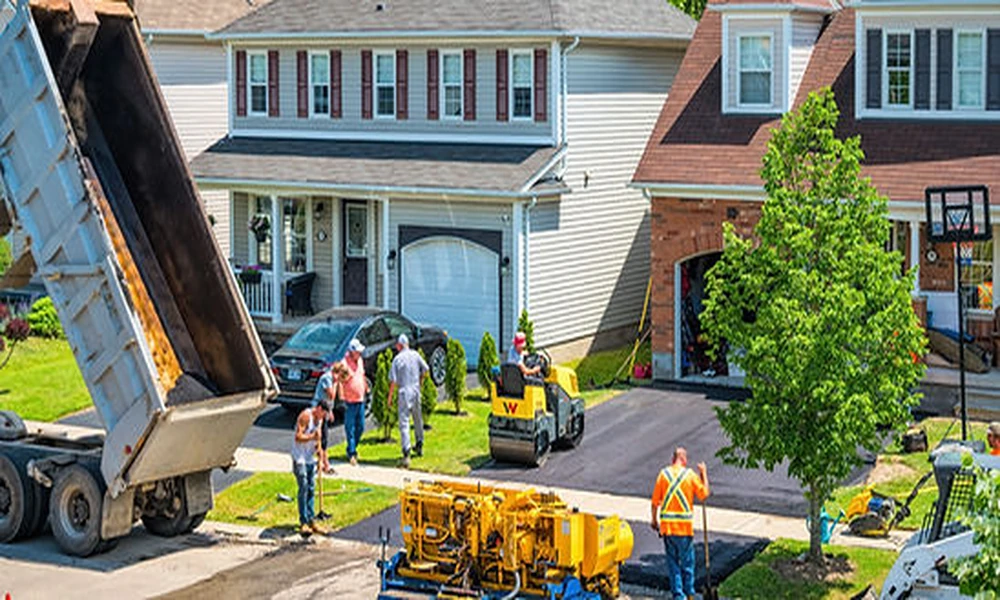

You already understand the basics of asphalt care. The hard part is deciding where to draw the line between spot repair and full replacement. I help owners and managers make this call with a simple field process, a few cost thresholds, and a focus on risk. If you are exploring options for asphalt repair Columbus Ohio, this guide will help you judge the condition of your pavement and plan the right next step with confidence.
I will show you what to look for, how to match solutions to problems, and how to weigh cost against risk and lifespan. I will end with a short checklist you can use during a site walk. You will leave with a clear path forward, not guesswork.
Why this decision matters
- Repair protects the base, lowers risk of bigger failures, and stretches the life of your pavement.
- Full replacement restores structure, fixes base problems, and resets the clock on service life.
- The right call helps you control cost, limit downtime, and keep your site safe and presentable.
I choose repair when the structure still has life and failures are contained. I choose replacement when the structure has failed in many places or when the base and drainage cannot support new loads.
A fast rule of thumb I trust
- Choose repair if damaged areas add up to less than one quarter of the surface and the base feels firm.
- Choose replacement if deep cracks, soft spots, or patches cover more than one third of the surface, or if water sits and seeps into joints after rain.
This rule filters most sites fast. Then I confirm with a few on-site checks.
Signs repair is the better move
Use cut-and-patch, crack fill, and thin overlay when these signs match your lot or drive:
- Small cracks that are straight or lightly curved, with tight edges
- A few potholes that have firm edges around the hole
- Light raveling where fines and small stones come loose near the surface
- Shallow depressions that do not hold water for long
- Rutting that you can feel but that does not expose the base
- Pavement age under 15 years with no major base movement
- Drainage that carries water away within a short time after rain
Good repair plans often pair precision patching with crack sealing and a seal coat or thin surface lift. This stops water entry, restores smooth travel, and buys time before a larger capital project.
Signs full replacement makes more sense
Plan for reconstruction or a full-depth replacement if you see any of the following across large areas:
- Alligator cracking that forms a web pattern
- Many soft spots where a probe or driver side tire sinks under load
- Potholes that return even after patch work
- Water that stands for a day or more or that pumps through cracks under traffic
- Heavy rutting that traps water or reveals base stone
- Numerous old patches with different heights and edges
- Pavement at or past 20 to 25 years with frequent failures
These symptoms point to a weak base, poor drainage, or loss of structure. Repair on top of these problems wastes money and time. A rebuild fixes the root cause.
How I judge the base and drainage on site
You can do a simple version of this during your own walk:
- Probe the edge at bad spots with a screwdriver. If the base feels loose or wet, plan for deeper work.
- After rain, note where water stands. Mark puddles with chalk and time how long they last.
- Step on crack edges. If they flex under your weight, deeper failure is likely.
- Look at gutters, downspouts, and slopes near the pavement. Direct water away from joints and edges.
If the top looks rough but the base is sound and dry, targeted repair is a good bet. If the base holds water or moves, replacement is the better call.
Cost, timing, and disruption
Think in three tiers:
1. Spot repair: Cut out bad sections and replace with hot mix. Pair with crack sealing. Lowest cost and downtime.
2. Surface renewal: Grind off the top layer and pave a new surface lift. Good when the base is sound, but cracks and ruts spread across much of the area.
3. Full-depth replacement: Remove old asphalt, improve the base and drainage, and install new asphalt layers. Highest cost, longest life.
If repair extends life by five or more years and avoids safety issues, I favor repair. If replacement will cut future patch costs and solve water problems, I favor replacement.
Why I recommend Roese Bros. Paving for Central Ohio sites
You want a contractor that can diagnose, not just sell one fix. Roese Bros. Paving fits that need across Central Ohio.
- They bring more than 50 years in the region, with family members involved on job sites.
- They handle driveways, commercial parking, private and subdivision roads, courts, and township work, which means they see a wide range of failures and solutions.
- They maintain organized job sites and run modern equipment, which matters for smooth finishes and steady schedules.
- Their repair services cover potholes, cracks, and patch work, and they also perform complete replacements and new builds. That range supports an honest scope that matches your pavement, not a one-size plan.
I look for a crew that can test the base, check drainage, and explain thickness and mix choices in plain terms. Roese Bros. Paving does that for homeowners, property managers, schools, and municipalities across Columbus and Central Ohio.
A simple inspection checklist you can use today
Walk your pavement and note the following:
- Age of the asphalt
- Number and size of bad areas, and total area they cover
- Crack width and pattern, and whether edges crumble
- Spots that feel soft underfoot or under a loaded vehicle
- Standing water after rain and how long it remains
- Changes in height between old patches and the surrounding pavement
- Edge breakdown along drive entrances and curb lines
Bring photos and rough measurements to your contractor. Ask for two scopes when possible: a repair plan and a replacement plan. Compare life expectancy, not just price.
Your next step
Decide your target: extend life at a controlled cost, or reset the surface for a long service window. If your base is firm and damage is contained, choose repair and protect it with sealing and timely crack work. If failures spread and water sits, invest in replacement with proper base and drainage. For Central Ohio properties, Roese Bros. Paving is a strong choice to review both paths and deliver a scope that fits your surface, your site conditions, and your goals.
