
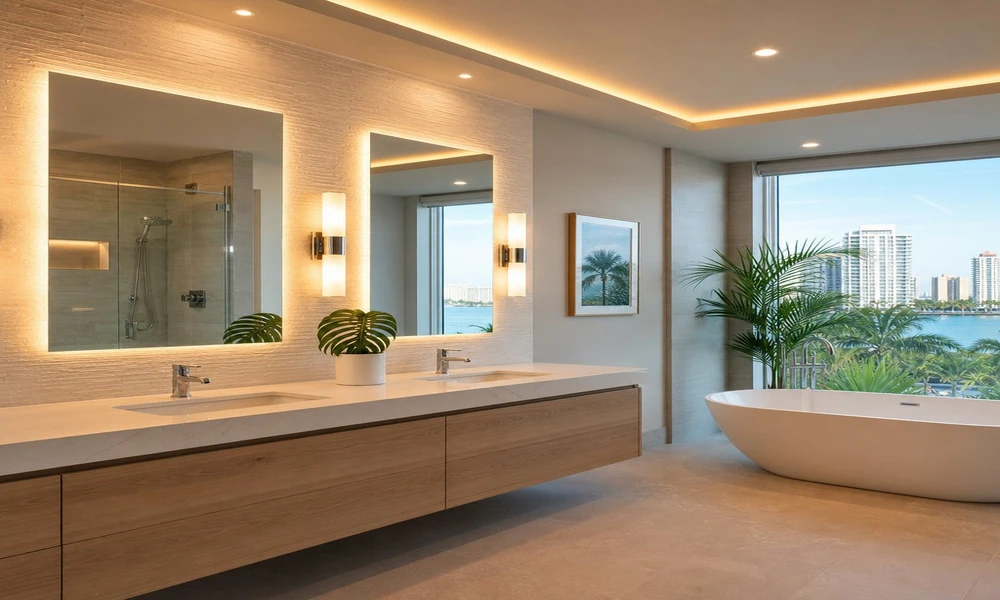

There is more to a bathroom remodel than tile, fixtures and paint. Bathroom electrical installation is one area that directly impacts the safety, brightness and usability of your bathroom. Because of humidity, heat and storm season in Miami (there is a useful breakdown at https://www.climate.gov/news-features), a bathroom remodel electrical system needs to be thoughtfully planned.
Bathroom Electrical Installation in Miami – What You Need to Know
Water and electricity rarely mix well, and Miami humidity doesn’t help the situation. For these reasons, bathroom electrical installation in Miami must be approached with care.
Proper bathroom electrical installation in Miami should incorporate GFCI-protected outlets, correct outlet and switch placement, damp-rated or wet-rated lighting, appropriate wiring for an exhaust fan, adequate circuit capacity and moisture-resistant options.
Even a small bathroom might require more electrical capacity than you realize due to hair dryers, razors, electric toothbrushes, lighted mirrors, bidet seats or ventilation fans.
Proper planning ensures that you don’t end up with an overloaded circuit or the frustration of unplanned changes after the project is complete.
Important Electrical Features in a Bathroom Remodel
A thoughtfully designed bathroom electrical layout will help ensure that your bathroom is easy to use and safe. In Miami, these features help ensure that the room is ready to handle the humidity.
Ground Fault Circuit Interrupters
GFCIs protect against electrical shock (check this site) by quickly cutting power if they detect an electrical imbalance. This is especially important in bathrooms where outlets are located near sinks and water. Make sure your bathroom outlets are GFCI-protected.
Outlets should be conveniently located but far enough from the sink or shower that water splash isn’t a concern.
Bathroom Lighting
Bathroom lighting should be layered for optimal illumination. Recessed ceiling lights provide ambient lighting, while vanity lights are helpful for applying makeup and grooming. Shower lighting should be rated for damp or wet areas.
Many Miami bathrooms lack natural light, which can make them seem dingy and closed in. A well-designed lighting plan helps eliminate dark corners and creates a clean, bright feeling.
Ventilation
Proper ventilation is key in South Florida. Without it, steam can build up on mirrors, walls, cabinets and ceilings.
Trapped moisture can cause mold and mildew, which is not only unsightly but can cause odor issues as well. An appropriately sized and properly wired exhaust fan is crucial for keeping your bathroom fresh.
Consider adding a timer or humidity sensor to make sure your bathroom stays properly ventilated.
Considerations for Miami Bathrooms
Electrical installation in bathrooms varies depending on your home’s age, size and style.
Older homes may have dated electrical systems, limited panel space or shared circuits that were not designed for the power demands of modern appliances. Condos and townhomes may also have additional requirements for electrical remodeling.
Coastal humidity can lead to corrosion, so the quality of fixtures and how they’re installed matters.
If your bathroom has experienced past water damage, you’ll want to address those issues first before tiling over or covering them up.
Guest bathrooms will likely have different needs than a primary bathroom with double vanities, upgraded lighting and additional features.
The best approach is to start with the intended use of the bathroom.
Common Bathroom Electrical Mistakes to Avoid
Bathroom electrical installation is often overlooked in the remodeling process, but the cost of fixing an error can be steep once drywall and tile are installed. Some common errors include:
- Not installing enough bathroom vanity outlets
- Using fixtures that aren’t rated for damp or wet areas
- Placing switches or outlets too close to water
- Forgetting proper exhaust fan wiring
- Adding too much load to an aging circuit
- Waiting until after mirrors and cabinetry are in place to plan bathroom lighting
The bathroom is not a normal room in your home. Water changes everything. Be sure to account for bathroom electrical needs early in your remodeling process.
Signs Your Bathroom Needs an Electrical Upgrade
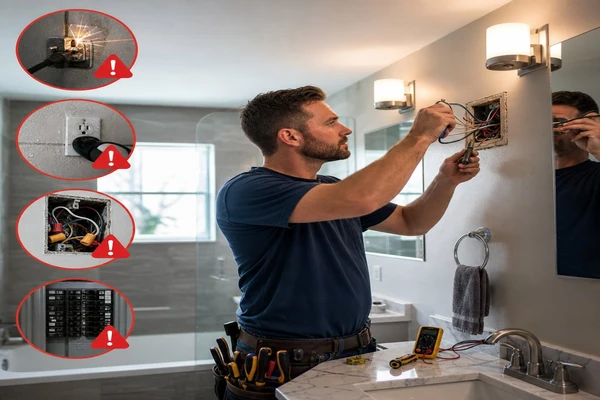
Do the lights flicker or do the breakers frequently trip? Are outlets hot to the touch? Or does the bathroom have too few receptacles? If so, it might be time to upgrade your bathroom’s electrical system.
A bathroom remodel offers the perfect opportunity to evaluate your current wiring and upgrade if needed. Since walls and ceilings are often already open during a remodel, now is a good time to assess whether your circuit is adequate for additional lighting, outlets or ventilation.
Upgrading your electrical system during your remodel is a great time to install additional features such as recessed lighting, lighted mirrors, smart switches and upgraded ventilation.
In Miami-Dade, electrical changes in bathrooms might need a permit and inspection, particularly if you’re adding circuits or moving fixtures, or opening walls. Plan for that upfront, so you don’t have to redo drywall, tile or cabinets later. It also establishes a paper trail that the work meets today’s standards in case of insurance claims or home sales.
Photograph wiring routes, junction boxes, and fixture locations before drywall is installed. These records prove helpful when making repairs down the road, when you install mirrors, change cabinets, or troubleshoot wiring issues. They also make it less likely that you will drill into a wire by accident in the future.
Build Safety Into Your Bathroom Remodel
A remodel is the ideal time to consider your bathroom electrical installation needs. By taking the time to think through safety concerns such as moisture, outlet location, lighting, ventilation and circuit capacity, you can ensure that your bathroom remodel is not only beautiful but also practical and long-lasting.
A well-planned electrical system can transform your bathroom into a space that is bright, functional and able to withstand Miami humidity.
